

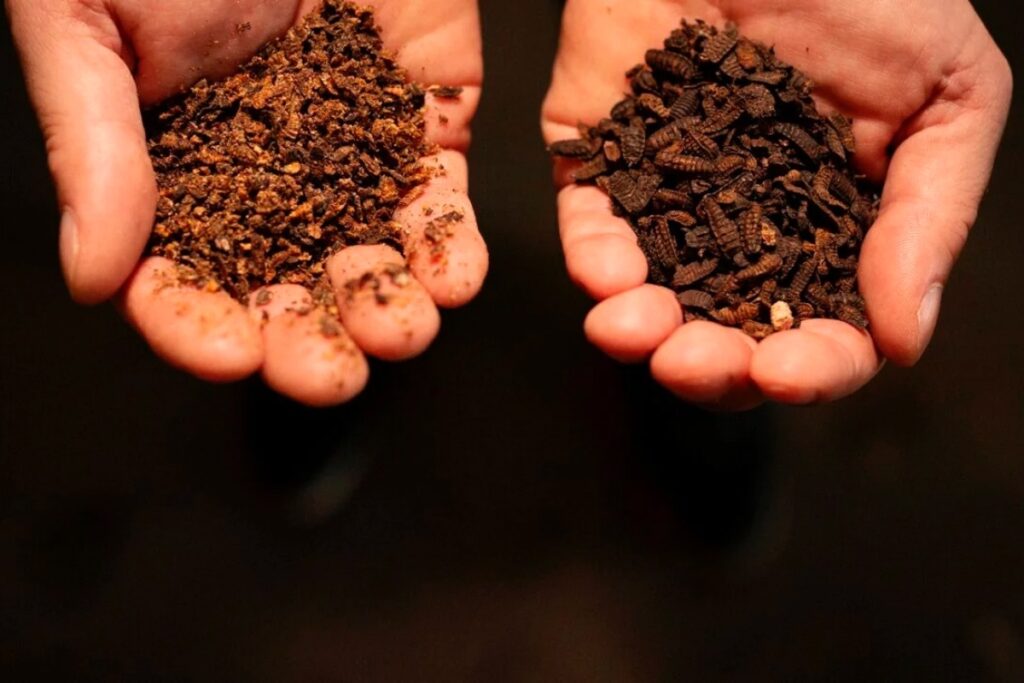
El ITG Technology Centre develops with Alfaprogal, Galician subsidiary of the company Bioflytech, an intelligent precision system that optimizes the industrial breeding of fly larvae black soldier (Hermeticia iLlucens). This R&D initiative, called IAPSI and in which the University University of A Coruña (UDC), It proposes a new model of strategic livestock farming, a more sustainable alternative to the traditional one, innovation y that promotes the circular economy. The goal is to create an automated, intelligent, and scalable system that improves the performance and environmental footprint of production.
ITGAs a technology provider, [Company Name] will introduce advanced solutions in machine vision, quantum computing, IoT, automation, and artificial intelligence (AI). Sensor and traceability systems will also be used to monitor all process variables in real time. Advanced image processing technologies will enable the detection and analysis of crop health, while AI algorithms and automated systems will optimize feeding, irrigation, and environmental control on the farms.
“The advanced digital technologies we develop at ITG can transform traditional production models into more efficient and sustainable schemes, and this is a clear example of that.”
Oscar Gonzalez Represas, Director of the AI & ICT Area at ITG.
With a budget of more than 3,6 million euros, the initiative led by Bioflytech will also include the Water and Environmental Engineering (GEAMA) research groups and the Centre for Technological Innovation in Building and Civil Engineering (CITEEC) of the UDC.
Bioflytech will provide the industrial environment where the system tests will be carried out, using the company's production facilities in Palas de Rei (Lugo), which have an annual production capacity of 12.000 tons of black soldier fly larvae. The University of A Coruña (UDC) will contribute its financial resources. IAPSI is an academic research center specializing in sustainability, environmental testing, and analysis. It also receives support from the Ministry of Science, Innovation and Universities and the State Research Agency, and is co-financed by the European Union through the ERDF funds.