
El Technological Institute of Ceramics (ITC) REDIT– has been awarded the NOVA 2026 Prize for Innovation in Industrial Processes. Furthermore, the Castellón Technology Centre and ASEBEC are making progress in introducing AI into ceramic machinery. Similarly, ITC has signed an agreement with ARIVAL to promote sustainability in the aggregates sector.
Innovation Award in Industrial Processes
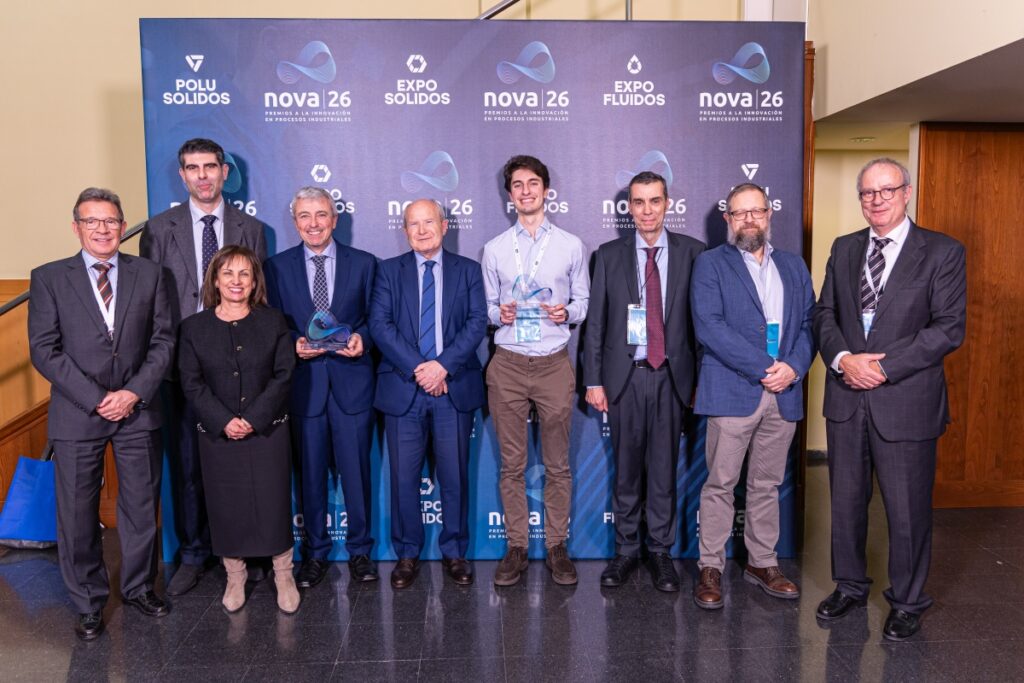
Organized by the Exposólidos, Polusólidos, and Expofluidos trade fairs, the NOVA 2026 Awards are dedicated to Innovation in Industrial Processes. Members of the Institute of Ceramic Technology (ITC) attended the ceremony on February 10th at the La Farga Auditorium in Hospitalet de Llobregat (Barcelona) to receive one of these awards.
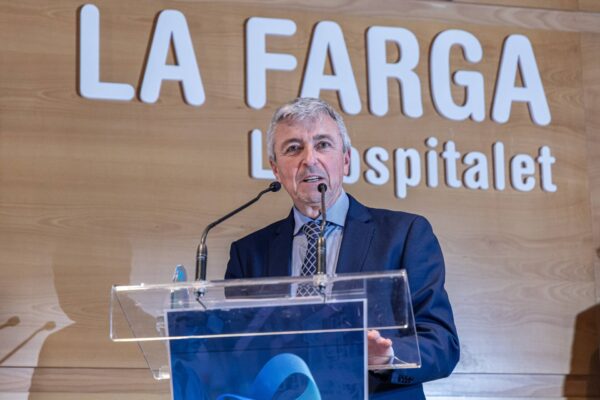
Specifically, it was José Gustavo Mallol Gasch who collected the NOVA Award 2026 in the category of “Research Award in Industrial Processes”, in this case for the work that the ITC is developing through several research projects on the recovery of critical materials from discarded lithium-ion batteries and the recycling of these batteries, in order to give them a new life.
All of this is achieved through highly innovative and sustainable processes. This research is being conducted in the Chemical Technologies Area of the ITC, whose head, María Fernanda Gazulla, was also present during the event.
The NOVA Awards aim to give visibility to solids, fluids, and collection and filtration technologies in industrial processes, as well as highlighting innovations in industrial processes, both at a technological level and for their sustainability.
As mentioned, the delivery took place at the end of the first day of EXPOSÓLIDOS, POLUSÓLIDOS and EXPOFLUIDOS 2026, where ITC members who are experts in advanced industrial processes also attend each edition.
Artificial Intelligence in Ceramic Machinery
The Spanish Association of Manufacturers of Machinery and Equipment for the Ceramic Industry (ASEBEC) and the Institute of Ceramic Technology (ITC) They continue to make steady progress in implementing Artificial Intelligence in the Spanish machinery industry, moving from theory to practical application.
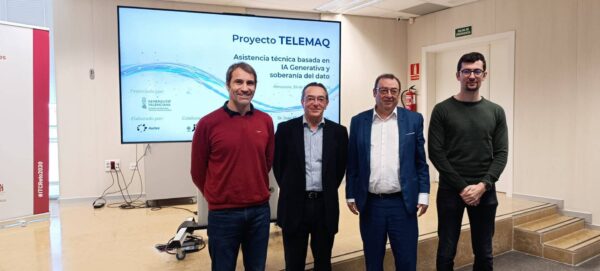
Specifically, on February 26, representatives of the firms affiliated with ASEBEC gathered at the ITC headquarters located in Almassora to learn the final results of the TELEMAQ projectThis initiative, which began a year ago with the support of the General Directorate of Industry of the Valencian Government (within the INENTI 24/25 framework) and under the coordination of ASEBEC, has been developed by the experts of the ITC.
TELEMAQ's main objective has been to develop and implement a telematic remote assistance solution using Generative Artificial Intelligence, specifically designed for the needs and safety of ceramic industrial plants.
Juan Boix and Juan Miguel Tiscar, researchers from the Industrial Processes Area of the Castellón Technology Centre, were responsible for giving a practical demonstration of the developed platform. During their presentation, they emphasized that TELEMAQ's main focus has been to resolve the industry's major dilemma regarding AI: data privacy and sovereignty.
Unlike cloud-based business models (such as ChatGPT), which can compromise manufacturers' intellectual property, TELEMAQ uses open-source Language Models (LLM) and local architectures. This ensures that ASEBEC member companies' technical know-how, manuals, and trade secrets remain 100% under their control, without relying on tech giants.
To ensure technical accuracy and prevent the AI from "inventing" answers (hallucinations), according to experts, the platform was built using the RAG (Recall Augmented Generation) methodology. In this way, the AI acts as a reading engine that answers questions from international customers 24/7 in any language, but based strictly and solely on the official technical documentation uploaded by each manufacturer.
The experts of ITC They also stated that this milestone prepares the ceramic machinery sector in Castellón for the imminent future: the evolution towards autonomous "AI Agents" and the direct integration of these digital brains into the control systems (PLCs) of the machines themselves (Edge AI).
TELEMAQ aims to implement these innovative solutions in the real environment of companies in order to increase their competitiveness in an increasingly complex global market.
Furthermore, ASEBEC announced today an agreement between ASEBEC and CESCE, presented by the regional director of CESCE, Rafael García Sanz. He explained to representatives of ASEBEC's member companies the features and advantages of the industrial insurance policy for all members.
Promoting sustainability in the aggregates sector
Likewise, the Institute of Ceramic Technology (ITC) –REDIT– and the Association of Aggregate Companies of the Valencian Community (ARIVAL) have signed a collaboration agreement at the ITC to promote sustainability and the circular economy among companies in the aggregate sector in the Valencian Community.
We recall that last year both entities held a meeting in which some key points were pre-established and formalized in this agreement, since before the signing they explored synergies to promote the circular economy and the reindustrialization of aggregates in the Valencian Community, as well as addressing joint lines of action between companies in the sector and the administration to promote sustainability and the reuse of materials.
In this sense, the Castellón Technology Centre has extensive experience in the study and application of its technological expertise to give a second life to waste, an objective aligned with the needs of the aggregate extraction industry represented by this association.
The ITC was present at the 50th ARIVAL General Assembly on September 26, 2025, reaffirming the ongoing collaboration between these two entities.
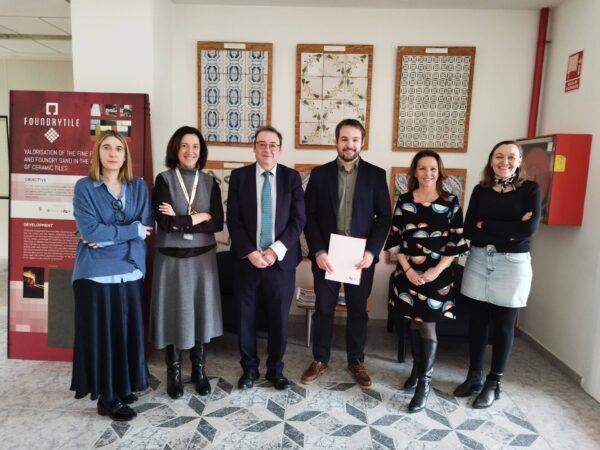
The document was signed by the presidents of ARIVAL and ITC, respectively, Alfredo Marmaneu Menero and Juan Vicente Bono Sales. Also present were the Secretary General of ARIVAL, Ana Barella Val, the Director General of ITC, Yolanda Reig, and ITC representatives with experience in the treatment of waste that could be used to obtain aggregates for construction, thus moving towards a more sustainable industry.
Also, regarding exposure to Respirable Crystalline Silica, the ITC can offer advice, services, testing, training, and more, as it has extensive experience in this area, as well as the appropriate infrastructure, developed methodologies, and experienced staff.
In the section on air quality, ITC It also has extensive experience that it can transfer to companies in the aggregates sector, in order to improve the occupational health of those who operate in this sector.
These and other aspects are addressed in the agreement, which will help improve the aggregates sector in the Valencian Community, an industry already developing sustainable and environmentally conscious practices. Signing this agreement with the ITC further strengthens this commitment by combining resources, knowledge, personnel, infrastructure, and, above all, an industry that innovates with purpose.