
The results obtained from the research of the RUGUPLAS project confirm the potential for valorizing the algae Rugulopteryx okamurae for the production of bioplastics for the fishing sector.
On the other hand, AIMPLAS It promotes the use of artificial intelligence to predict the properties of plastic materials with the POLY-ML project.
The RESSCATE project will also transform industrial rubber waste into new circular materials. This Valencian initiative, coordinated by Tecnocaucho Rolls & Covers and with the participation of AIMPLAS and ITQ-CSIC, is developing pioneering technologies to recycle non-pneumatic rubber and reintegrate it into industry.
Finally, the companies UBE and ZIKNES, the University of Valencia and the Technological Institute of Plastics are collaborating on the REDES4VALUE project, which converts fishing nets into recycled nylon for industrial applications.
VValuation of invasive algae for bioplastics production
El RUGUPLAS project, coordinated by HyT Asociación Hombre y Territorio together with AIMPLAS, Technological Institute of PlasticThe first results have been obtained to evaluate the potential of the invasive alga Rugulopteryx okamurae as a raw material for obtaining bioplastics or biomaterials that can be incorporated into the fishing sector. The analyses carried out confirm the alga's potential for valorization, although further research will be necessary to assess its viability.
Among the next steps are the development of pretreatment methods to reduce contaminants and the application of technologies for obtaining bioplastics and biomaterials adapted to the fishing industry. Furthermore, the characterization has not revealed significant differences between the fresh and beached samples. The transfer of these results to the industry will take place on January 19th at a workshop.
Since its first detection in the Strait of Gibraltar in 2016, the invasive algae Rugulopteryx okamurae It has become one of the fastest-spreading marine species along the Spanish coast. Native to the Indo-Pacific, this brown macroalga has found highly favorable conditions in the Mediterranean and Atlantic waters of southern Spain, where it has expanded without natural predators or effective ecological control. The consequences of this proliferation are serious: large accumulations of biomass displace native algal communities, altering marine ecosystems and reducing local biodiversity.
On the coast, large quantities of algal material wash ashore, negatively impacting the tourism sector by diminishing the appeal of coastal areas. For the fishing industry, the impact is even more direct. R. okamurae tends to accumulate on the seabed, where it becomes entangled in nets, traps, and other fishing gear. This not only causes significant operational difficulties but also results in substantial economic losses due to equipment damage, reduced catch efficiency, and the need for additional labor to remove the biomass.
RUGUPLAS has spent the last 16 months evaluating the potential of this algae as a raw material for obtaining bioplastics or biomaterials that can be incorporated into the fishing sector. In this way, they are seeking to give this waste a useful and sustainable purpose, while also contributing to the reduction of single-use plastics that, due to poor waste management, can end up as marine litter.
The project was developed through active collaboration with fishing guilds in three Spanish marine districts (Sanlúcar de Barrameda, Estepona, and Gandía), with express authorization from the relevant authorities. This involved the creation and implementation of innovative, traceable, and safe sampling and analysis protocols that allow for the biochemical characterization of the algae and the marine environment in which it grows. In parallel, the current use of conventional plastics in the fishing guilds was evaluated to identify those that could be replaced by biodegradable and renewable bioplastics.
Due to its technical focus and the scope of its objectives, the RUGUPLAS project has generated synergies with various groups and projects working on related topics. Furthermore, specific outreach materials have been developed and distributed to introduce the little-known world of macroalgae and their potential uses to the general public and the fishing industry in particular.
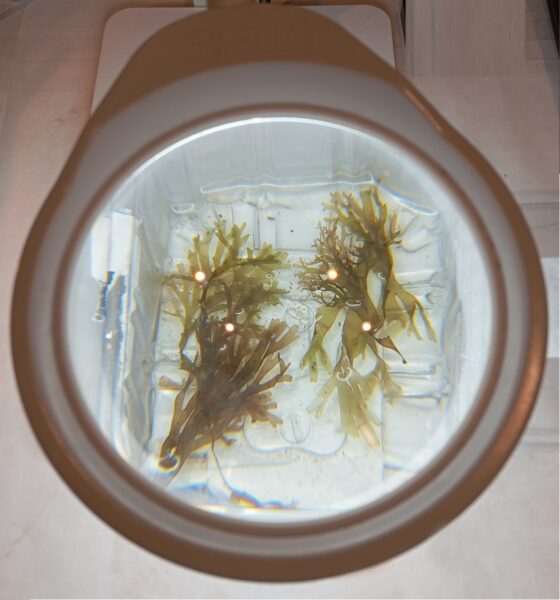
From a more technical standpoint, samples of algae and seawater were collected each season, both on the beach and from fishing gear during fishing operations, and then analyzed. This onboard sampling was carried out thanks to the collaboration of the vessel “Jaime y Sara” from Estepona and its captain, Eduardo Peña Santos. Regarding the physicochemical characterization of the samples... Rugulopteryx okamuraeThe analysis focused on parameters such as nutritional composition, chlorophyll, lipid profile, carbohydrates, amino acids, vitamins, and heavy metals. A microbiological study was also conducted, and mycotoxins, pesticides, and microcystins were analyzed. The characterization revealed no significant differences between fresh and beached samples, nor between different seasons.
The microplastics absorbed by the algae and in the surrounding water have also been quantified, allowing for a better understanding of the potential role of algae as a vector of microplastic pollution in marine ecosystems. In all the samples analyzed, the presence of microplastics was below the limit of detection (LOD), which rules out the possibility that R. okamurae It may be a vector for these pollutants. However, some macroplastics contained in the algae collected on board were indeed separated.
Furthermore, the potential of water in contact with algal biomass to biodegrade marine biodegradable polymers has been explored, along with microbiological research on the algal biomass and the surrounding seawater. This assessment provides an initial indication of how the characteristics of the R. okamurae microbiota may influence the surrounding marine biodegradation of polymers destined for the sea (e.g., fishing gear). Additionally, the characterization of R. okamurae It has explored macronutrients, pigments, minerals, trace elements, vitamins and amino acids in order to respond to another important objective of RUGUPLAS: to determine the possible ways of valorizing the algae, focusing on its application in bioplastics or biomaterials suitable for the fishing sector.
In terms of outreach and communication, the project has participated in nearly 20 national and international fairs, symposia, workshops, and conferences, where its objectives and progress have been shared. Media coverage in print, radio, and television has been significant, with approximately 50 different outlets expressing interest. Furthermore, a safe and environmentally responsible procedure for the collection, storage, and shipment of algae has been developed.
Applying AI tools in the industrial sector
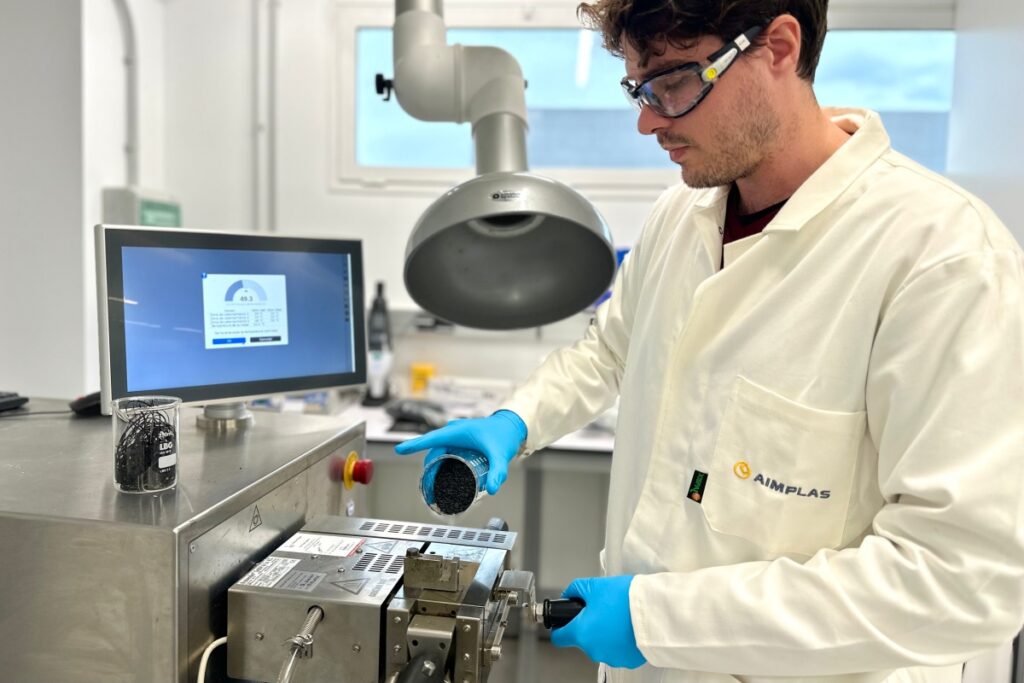
With the aim of transforming the design of plastic materials, AIMPLAS, the Technological Institute of Plastics, has launched the POLY-ML project, an R&D initiative that applies advanced techniques of machine learning algorithm to predict material properties based on their composition and processing conditions. These techniques allow for optimized formulations, reduced need for experimental testing, and improved efficiency in R&D processes.
The project focuses on developing predictive models capable of anticipating the mechanical, thermal, and physical properties of materials, enabling faster and more accurate decision-making in the early stages of development. This data-driven approach helps reduce costs, time, and waste generation, while also improving process traceability and sustainability.
POLY-ML is funded by the Valencian Institute of Competitiveness and Innovation (IVACE+i) and the ERDF (European Regional Development Fund), and involves the participation of Tyris AI, a company specializing in artificial intelligence applied to industry, and FAPERIN, a plastics processing company, primarily producing injection-molded polypropylene for the automotive sector. FAPERIN contributes data from its processes to train models and draw conclusions, while Tyris AI contributes its expertise in applying AI in the industrial sector.
The project focuses on a tool that allows the development of models, even without programming knowledge, to facilitate the adoption of artificial intelligence in the plastics sector, promoting its digitalization and competitiveness.
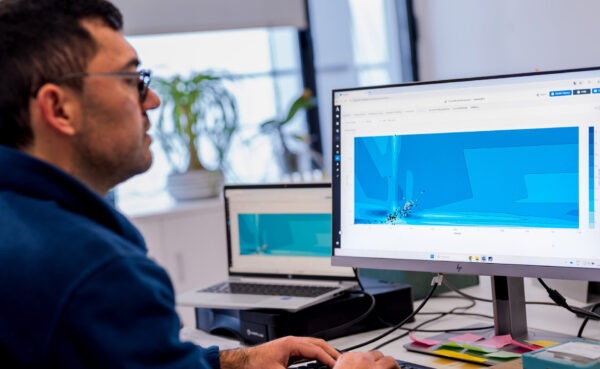
“With the POLY-ML project, we are taking an important step towards the real-world application of artificial intelligence in the design of plastic materials. Our goal is for the models to be validated in industrial environments, which will guarantee their reliability and usefulness under real operating conditions.” explains Joan Giner, researcher at the AIMPLAS Characterization Laboratory.
POLY-ML generates significant benefits in terms of environmental sustainability, workplace well-being, and economic development. From an environmental perspective, it helps reduce laboratory waste, as well as the use of hazardous solvents and additives, by avoiding inefficient formulations. In the area of occupational health, it decreases the exposure of technical personnel to chemical substances and reduces the risks associated with experimental testing. At the economic and territorial level, the project strengthens the competitiveness of the plastics sector in the Valencian Community, promotes the creation of skilled jobs, and fosters technological autonomy in the development of new materials.
Furthermore, it aligns with the RIS3-CV strategy in key areas such as digitalization, sustainability, the circular economy and collaboration between agents of the industrial and research ecosystem, thus consolidating the position of the Valencian Community as a benchmark in the application of artificial intelligence to the design of plastic materials.
Industrial rubber waste in new circular materials
Rubber is an essential material in numerous industrial sectors due to its elasticity, strength, and durability. However, these same properties make it difficult to recycle, especially in the case of non-pneumatic rubber. In Spain, more than 10.000 tons of this type of waste are generated annually, most of which ends up in landfills or is incinerated, with the consequent environmental impact. Furthermore, virgin rubber is included on the European Union's list of Critical Raw Materials, which underscores the urgent need to find sustainable alternatives that reduce dependence on external resources.
In this context they are born project RESCUE (Efficient reuse of rubber by-products with advanced devulcanization technologies), a project developed entirely in the Valencian Community with the aim of converting a complex waste product into a high value-added circular resource. Institute of Plastics Technology (AIMPLAS)The Institute of Chemical Technology (ITQ-CSIC) and the company Tecnocaucho Rolls & Covers are collaborating on this research, which focuses on two complementary technologies.
On one hand, mechanochemistry uses mechanical energy to break sulfur bonds without the need for solvents or extreme temperatures, resulting in a cleaner and more efficient process. On the other hand, catalytic hydrogenation employs metallic catalysts to selectively act on the chemical bonds responsible for rubber crosslinking, recovering a flexible and processable material.
The result is devulcanized rubber that can be revulcanized and incorporated into new formulations for demanding industrial applications, such as roller coatings. This transformation not only reduces the amount of waste sent to landfills or incinerators but also decreases CO₂ emissions and alleviates pressure on virgin rubber. From an economic standpoint, it turns a management cost into a savings opportunity and opens up new business lines based on high-value recycled materials. At an industrial level, it demonstrates that technologies that were previously only in the experimental phase can be scaled up to real-world production environments, offering viable and competitive solutions.
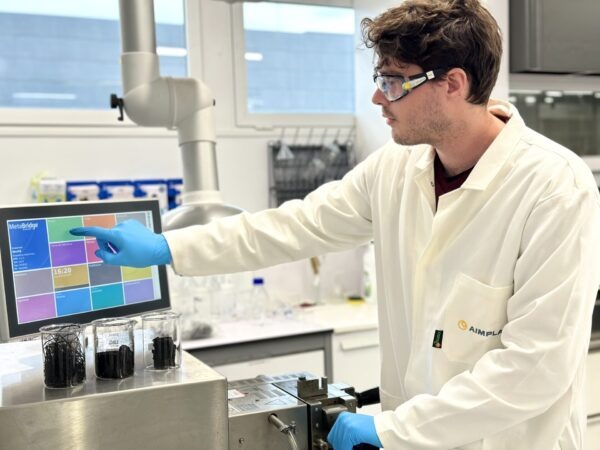
"The key lies in combining scientific knowledge with real-world industrial applications. Thanks to our collaboration with AIMPLAS and the CSIC, we are achieving results that can have a tangible impact on the sector's sustainability.“,” said David Albalate of Tecnocaucho Rolls & Covers, who is coordinating this research.
For his part, Giacomo Marra, a researcher in Mechanochemistry and Reactive Extrusion at AIMPLAS, explained that “RESSCATE demonstrates that it is possible to give industrial rubber a second life using clean and efficient technologies. We are transforming a problematic waste product into a competitive solution for industry.".
In the opinion of Pascual Oña of ITQ-CSIC “The project is an example of public-private collaboration that connects science, innovation and business to address a global challenge from a local ecosystem".
Fishing nets made from recycled nylon for industrial applications
The abandonment of fishing nets in seas and oceans is one of the most persistent environmental problems. To address this situation, the project NETWORKS4VALUE It works on the recovery and valorization of discarded fishing nets, transforming them into new, sustainable, high-value-added products such as recycled nylon, films for packaging and agricultural covers, automotive parts, and large-format parts produced by additive manufacturing. All of this is achieved through innovative mechanical and chemical recycling processes, as well as reactive extrusion.
This initiative, funded by the Valencian Institute of Competitiveness and Innovation (IVACE+i) and ERDF funds, brings together a consortium made up of AIMPLAS (Plastics Technology Institute)UBE, ZIKNES and the University of Valencia. The common goal: to close the life cycle of polyamides and reduce marine pollution through innovative solutions applicable to industry.
Although many nets are made from polyethylene or polypropylene, this project focuses on polyamide nets, a material with great potential for chemical recycling. Its structure allows for the recovery of monomers such as caprolactam and the production of new polyamides with properties virtually identical to virgin ones.
“We are achieving optimized conditions to depolymerize the networks and recover monomers with purities exceeding 95% in some streams under study at the laboratory level and exceeding 80% in pilot-scale operations. This will allow us to repolymerize and obtain new polyamides with quality equivalent to virgin polyamides.” explains Nairim Torrealba, researcher in Chemical Recycling at AIMPLAS.
Recycled polyamides are intended for sectors such as packaging, agriculture, automotive, and 3D printing. Companies like UBE are already exploring their commercialization, and ZIKNES is adapting its equipment to validate large-format parts. Initial applications could include packaging, agricultural covers, automotive components, and large-scale 3D demonstrators.
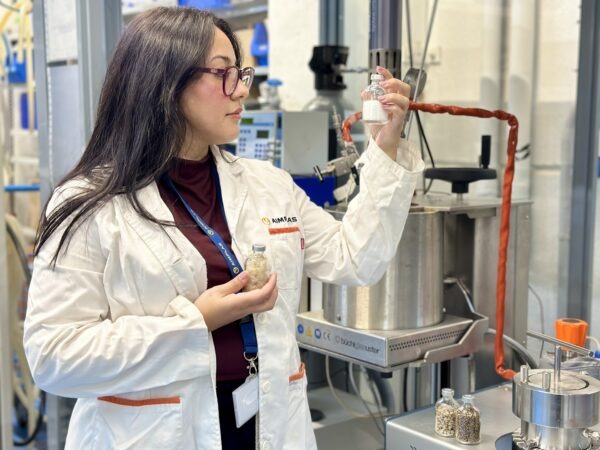
"These materials have immediate application in industry and a clear sustainability advantage over conventional polyamides. These solutions not only reduce dependence on virgin raw materials, but also open up new opportunities for industry in terms of sustainability and the circular economy.Torrealba pointed out.
REDES4VALUE is making progress in processes such as hydrothermal depolymerization, ionic liquid-assisted solvolysis, and reactive extrusion, in addition to comprehensive life cycle and feasibility assessments. One of the project's main challenges is the treatment of highly degraded networks with a high concentration of impurities, but the results are proving very promising.
The collaboration with the Sea2See brand has made it possible to have nets recovered in Ghana available since 2019, and has been key to structuring the circular value chain from the origin of the waste. “Without that contribution of material, it wouldn’t be possible to move forward. The networks that come from Ghana are essential to validate the processes and obtain real results.” Torrealba stated.
The project has AIMPLAS as the person responsible for chemical recycling tasks, UBE in the scaling and repolymerization part, ZIKNES in the validation in 3D printing and the MATS group of the University of Valencia (MATS-UV) in the studies of solvolysis and kinetics. “Our goal is to consolidate a chemical recycling line that can be applied to complex waste and demonstrate that it is a real and necessary solution,” Torrealba concluded.