
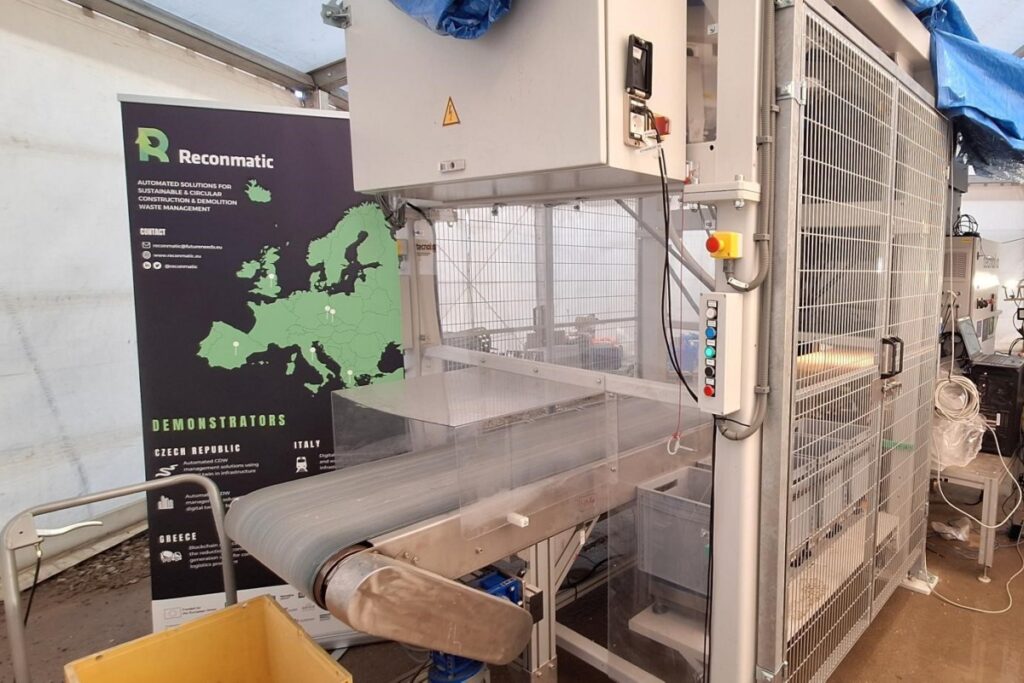
El TECNALIA Technology Centre and the company RECSO are promoting the reduction of waste management in construction and demolition with AI and robotics through the European project RECONMATIC.
The Basque Technology Centre has also presented its latest technologies in smart grids at the ENLIT 2025 Forum, a benchmark for the energy sector, which was held for the first time in Bilbao.
On the other hand, Javier Del Ser, a researcher in Artificial Intelligence at TECNALIA and EHU, is among the most cited scientists in the world. He has been the only researcher from the Basque Country recognized in his discipline by the list Highly Cited Researchers 2025 de Clarify, one of the most important worldwide.
Artificial Intelligence
The construction sector is the main consumer of mineral and non-renewable resources in the European Union, generating 36% of total waste. Most of this waste is produced during the construction and demolition phases.
El European project RECONMATIC It aims to improve recycling rates and reduce the environmental impact of the sector by testing, validating, and integrating innovative solutions for the management of construction and demolition waste (CDW). These solutions are based on new digital technologies, artificial intelligence, and robotics.
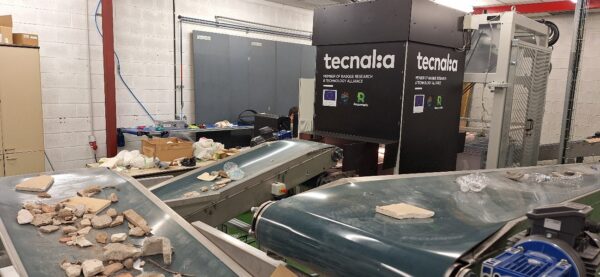
Among the various solutions the project is working on is the robot prototype developed by the Technology Centre TECNALIAThe prototype arrived this week at the Valladolid-based company Reciclados Sostenibles RECSO for validation in a real working environment.
The robot's function is to identify the different types of materials that are mixed in the waste stream using technologies based on hyperspectral techniques (specifically NIR) which, together with the use of Artificial Intelligence, allow the identification and characterization of materials with a precision that goes beyond human vision.
This aims to send the necessary signals to an articulated arm to separate the selected material from the waste stream. This precise and automatic separation optimizes the waste management process and yields high-value aggregates that can be used as a substitute for natural aggregates, thus reducing pressure on natural resources and the environmental footprint of the construction sector.
According to Javier Llorente, CEO of RECSO “The application of these technologies to recover construction materials marks a turning point in the sustainability of the sector, and allows us to think of buildings as a material bank, a temporary storage facility that retains its value and can be reused time and again when the building is no longer useful in its current configuration. These technologies allow us to highlight the role of Waste Managers, who must transform themselves into Material Manufacturers and contribute to the construction industry achieving zero waste in the not-too-distant future.”
According to Inés Díez Ortiz, a researcher at the materials laboratory of Tecnalia, “Participation in European projects represents a great opportunity to develop innovative technologies for the treatment of construction and demolition waste. These advances allow us to obtain even cleaner waste streams than those currently available and to add greater value to secondary waste streams.”.
In this way, he added, that “Progress is being made towards the sustainability of the sector, a fundamental aspect, since the responsible management of resources contributes to reducing the environmental impact, improving the energy efficiency of buildings and promoting practices that drive a more balanced and resilient urban development”.
The RECONMATIC project is framed within HORIZON EUROPE, where different institutions, organizations and companies from 5 European countries participate, including the Spanish companies RECSO and TECNALIA.
R&D for the future of the electricity grid
Furthermore, the Basque Technology Centre has participated in the strategic forum of reference for the energy sector, ENLIT EUROPE 2025This edition was held for the first time in Bilbao from November 18 to 20.
This is the most important trade fair in Europe in the field of smart grids and which expected to bring together more than 15.000 attendees and more than 700 exhibiting companies from around the world at Bilbao Exhibition Centre (BEC).
TECNALIA It brought its latest service innovations to the Fair to accelerate the introduction of new technologies into the market, helping the digital transformation of the energy system.
The Technology Centre, which shared a stand with the Basque Energy Cluster (C70), showcased its solutions in areas such as digitalization, cybersecurity, energy storage, distributed resource flexibility, energy planning, and automated facility inspection.
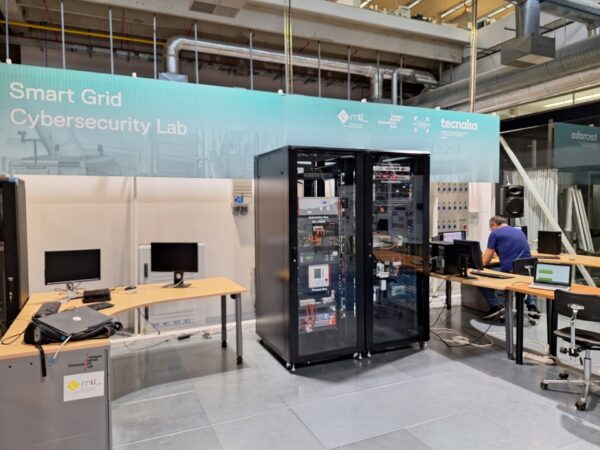
In addition, it showcased its comprehensive testing services platform for evaluating the functionality, cybersecurity and interoperability of smart grid equipment, as well as the certification of communication protocols, electromagnetic compatibility (EMC) testing, metrology (MID Directive) and durability.
TECNALIA It also announced its R&D activities and projects for companies and manufacturers of electrical equipment, analysis, modeling and simulation of electrical systems, applications to optimize the planning, operation, maintenance and management of energy in electrical networks, cyber-secure electronic solutions and products for electrical networks and power tools and converters for the integration of distributed energy resources into the network.
The most cited scientists worldwide
Javier Del Ser, principal investigator in Artificial Intelligence at TECNALIA, and distinguished researcher of the Department of Mathematics of the Faculty of Science and Technology of the University of the Basque Country (EHU), has been recognized as one of the most cited scientists worldwide on the list Highly Cited Researchers 2025 made for Clarify.
This prestigious ranking identifies the researchers with the greatest impact in their fields of knowledge over the last decade. Javier Del Ser is the only researcher from the Basque Country included in the ranking in the Computer Science and Artificial Intelligence category. Nationwide, and for this category, Del Ser shares this recognition with only one other scientist: Francisco Herrera, from the University of Granada.
This year, Clarify It has designated 6.868 highly cited researchers worldwide, following a rigorous process of verifying their integrity and scientific quality. This ranking reflects the influence of a small group of experts who set trends in science and technology globally.
The Highly Cited Researchers They represent approximately 1 in every 1.000 scientists worldwide, underscoring the exceptional nature of this recognition. Among them, 119 scientists are listed in the Computer Science and Artificial Intelligence category, with Del Ser being one of them.
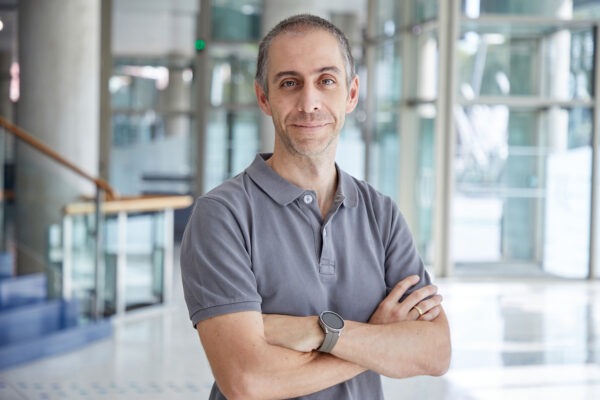
In the words of Javier del Ser himself: “I feel deeply grateful and honored for this recognition which, although awarded individually, I consider the result of the joint work of the TECNALIA (Core IA, DIGITAL) and EHU (MATHMODE) teams to which I have the privilege of belonging.”.
Javier Del Ser's research focuses on the development of applied Artificial Intelligence and machine learning techniques aimed at solving real-world modeling and optimization problems in strategic sectors such as industry, health, transport, energy, and mobility.
In his research, Javier places special emphasis on ensuring that AI-based solutions are reliable and explainable, thus guaranteeing their safe, ethical, and responsible use.
Throughout his career, he has published over 450 articles in international journals and conferences, edited several books, supervised 20 doctoral theses, and participated in more than 80 projects and contracts with companies. His research has received over 33.000 citations to date. He has also contributed to the design of the Spanish government's national R&D&I strategy in Artificial Intelligence and has received numerous awards, including the Basque Research & Technology Alliance (BRTA) Award for Best Research Career in 2023.