

81% of doctors have detected an increase in childhood illnesses associated with excessive screen use, and 95% of these healthcare professionals agree that excessive screen use negatively affects child development.
This is one of the conclusions of the study on the impact of overexposure to screens on children's health and development, conducted by the Technological Institute for Children's and Leisure Products (AIJU) –REDIT , in collaboration with the Crecer Jugando Foundation.
The study, which was presented alongside the 35th edition of the AIJU Guide 2025-2026, It gathers the perception of 65 doctors specializing in childhood and 334 families with children between 0 and 17 years old, revealing a clear shared concern between the health field and the family environment.
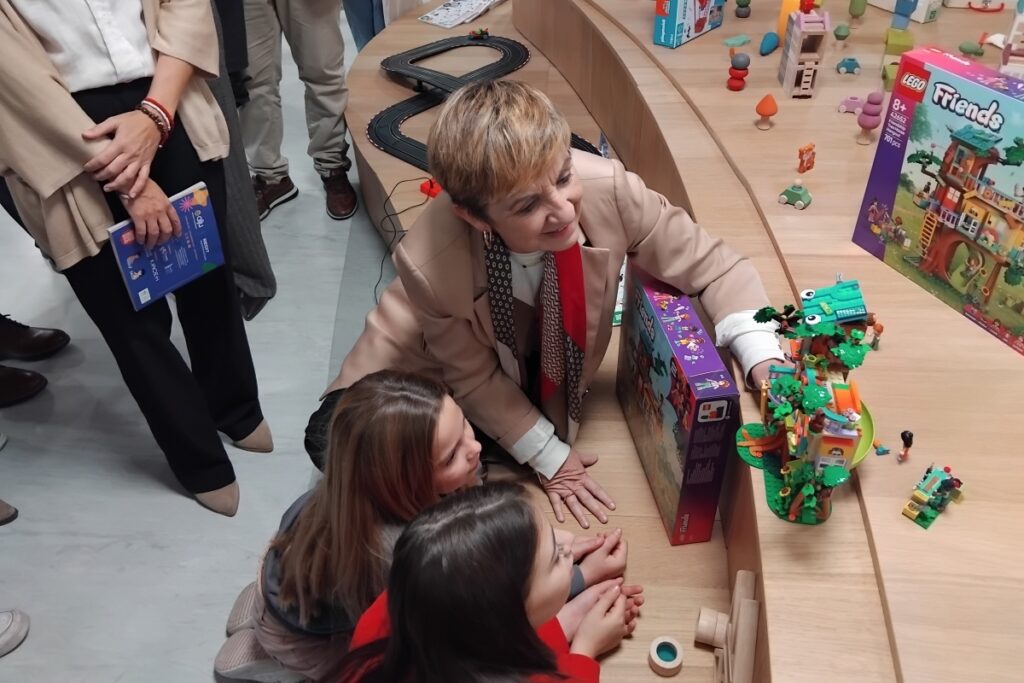
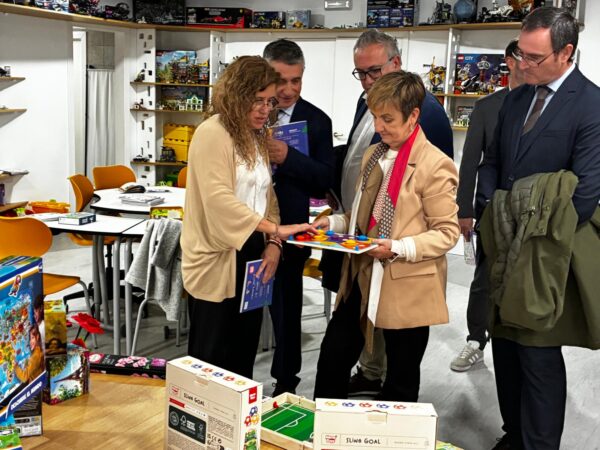
The presentation of this 2025-2026 edition, which took place in AIJUIt has brought together all the actors in the national toy sector and has been attended by the Minister of Innovation, Industry, Trade and Tourism, Marián Cano; the general director of the Spanish Association of Toy Manufacturers (AEFJ), José Antonio Pastor and the president of AIJU, Sandra Gómez.
Problems related to excessive screen use
According to the coordinator of the Child Research area in AIJUDuring his presentation, Pablo Busó stated that the objective of the study is to analyze the impact of excessive screen use on the physical, cognitive, emotional, and social development of children, from a medical and family perspective.
“The most frequent health problems detected by specialists include sleep disorders (81%), mental health (69%), obesity (63%), visual problems (63%) and postural or neuromotor alterations,” Pablo Busó has indicated.
According to this study, 68% of families express great concern about their children's screen time. In this regard, it is worth noting that 98% of children aged 4 to 6 do not meet the criteria established by the Spanish Association of Pediatrics (AEP) of zero screen time before the age of 6.
91% of children spend more time in front of screens than recommended by health experts. Furthermore, although 96% of families set rules for screen use, 71% find it difficult to enforce them due to factors such as lack of time, the need for support during other tasks, and conflicts with their children.
Therefore, as the coordinator of the Child Research area explains in AIJU, “Among the measures most valued by participants to reduce screen time are informational talks for families, inclusion of the topic in school curriculum content, parental control of time and content, use of public figures for awareness and illustrated stories".
“This research reaffirms the need to create screen-free play and socialization environments that promote healthy child development and where technology use is active and guided by families and professionals“,” Pablo Busó emphasizes.
AIJU Guide 2025-2026
The AIJU Guide 2025-2026 is a project funded by IVACE+i, through the GVA 2025 line, to enhance the capacity and activity of AIJUas well as to develop excellence in R&D, disseminate the results of the research carried out and facilitate and promote the transfer of knowledge to companies in the Valencian Community.
It is worth noting that, currently, it remains the only guide in the national context endorsed by consumer institutions that only recommends products that have passed pedagogical and usability studies with more than 100 hours of free play.
In this edition, several final product evaluation sessions were held with a multidisciplinary team of experts, in which 27 groups of companies and manufacturers participated, contributing a total of 68 products for study, of which 66 were selected to appear in this Guide.
To make it easier to find and consult, the toys recommended in this guide have been classified by theme, taking into account the different insights and psychopedagogical aspects they develop and within each block by age. In addition, as in the last edition, the AIJU 2025-26 Guide includes a category introduction with a sheet that provides information on where, how, with whom or what children play.
According to the president of AIJU, Sandra Gómez, “At AIJU, we have spent 35 years researching and supporting the sector to promote quality play products and experiences, adapted to the evolving needs of children. With this new edition of the AIJU Guide, we continue to reinforce this commitment, offering families rigorous information and promoting a culture of responsible and safe play.”
For his part, the general manager of AEFJ, José Antonio Pastor, highlighted that “We are at a time of change, in which screens occupy a large part of our lives, but in which families are also more aware of all the benefits that play brings to children's development. It's not just that it contributes to their physical or psychological development; playing is the main activity for today's child to become a balanced and happy adult.”
Kidults: the new way to play in adulthood
The AIJU 2025-26 Guide also highlights the Kidults phenomenon, which continues to grow and solidify as one of the most prominent trends in the toy market. More and more adults are incorporating games and toys into their daily leisure activities, driven by nostalgia, a desire to disconnect, and an interest in collecting.
According to the study carried out by AIJU According to a survey of 552 consumers, the majority of Kidults gamers are between 25 and 44 years old and spend between €100 and €300 per year on this hobby. Their preferred categories are board games and puzzles (20%-15%), followed by advanced construction sets (14%), crafts (13%), and technology toys (8%).
Regarding the frequency of play, most adults play occasionally (51%) or several times a month (30%) and the home remains the main space for play, often shared with children and family members, which strengthens the intergenerational bond.
The data shows that the main motivation for Kidults is leisure and fun (86%), followed by relaxation and disconnection (54%) and the development of skills such as strategy and creativity (34%), among others. These benefits confirm that play provides emotional well-being, cognitive stimulation, and strengthens social bonds.
Family Choice: Recommended in the AIJU Guide
During the presentation of the Guide, the Family Choice awards were granted for the third year, in their different categories: STEM, Healthy Living, Sustainability and Play for Change (Accessibility).
The aim of these awards is to recognize the effort made by companies in promoting the educational value of toys, and for this purpose, the votes of the strictest jury, made up of more than 550 families with children aged 0 to 11, have been used.
This time the winning toys were Padel Set, by Chicco, in the Healthy Living category; Friendship Tree House Get-Together, by Lego, in the Sustainability category; and Space Adventures Multimedia Telescope, by Vtech Electronic, in the STEM category.
Meanwhile, within the Play for Change category, Escape from Monsterland, by Miniland', and in the Accessibility subcategory, Barbie Fashionistas, by Mattel.
Download and access the AIJU Guide 2025-2026: HERE