

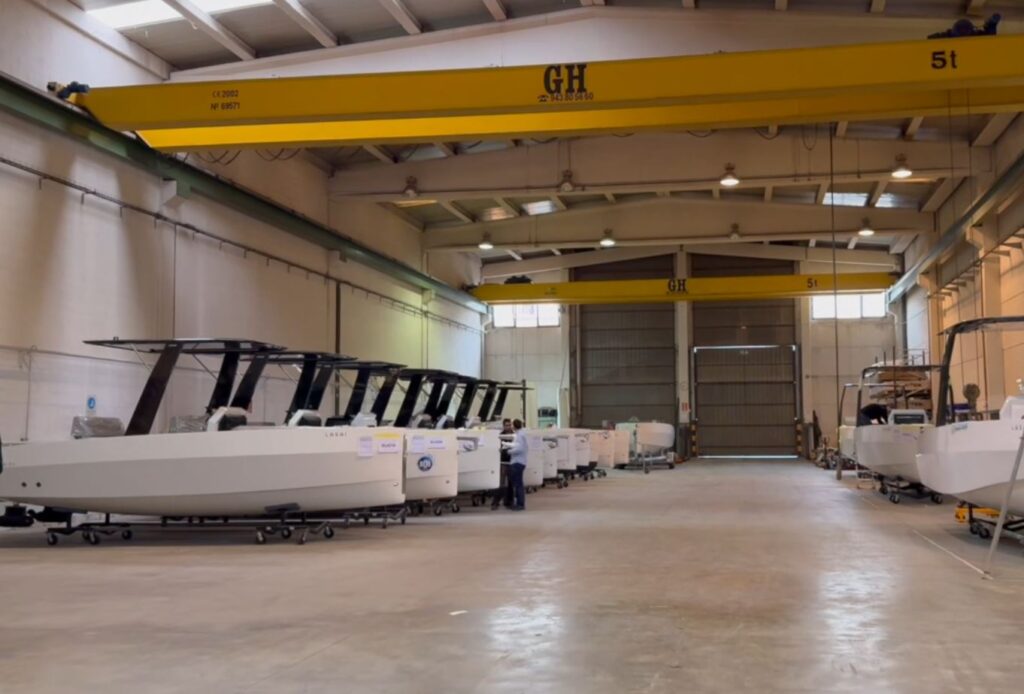
The Technological Centre for technological research and development TECNALIA and the company LASAI MARINE, dedicated to the design, manufacture, and marketing of solar-electric boats, have signed a collaboration agreement to develop new solar-electric propulsion technologies for recreational boats.
The objective is to contribute to the decarbonization of the recreational boating industry with innovations in the field of electromobility. The projects will focus on controlling electric propulsion, increasing solar-photovoltaic energy capture, and lightening vessels, among other areas.
Along these lines, one of the projects that is already underway is SE-BOAT, which aims to lead the European market for zero-emission recreational boats through research into storage technologies, solar-electric propulsion, control, sustainability, and vessel structure.
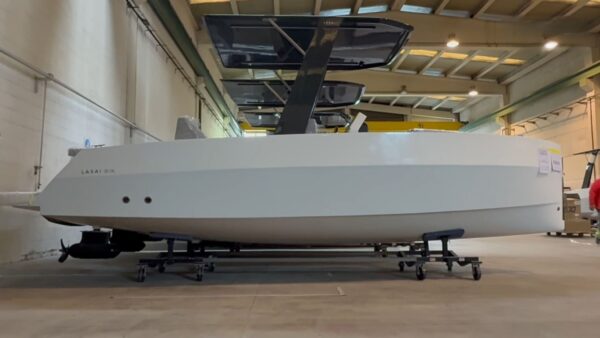
This is a Hazitek project of the Basque Government to support business R&D, where in addition to TECNALIA and LASAI MARINE, SUPSONIK, MASERMIC, BIRZIPLASTIC QUIMIBBER, collaborate CIDETEC, MONDRAGON GOI ESKOLA POLITEKNIKOA and GAIKER.
International pioneers
Currently, the only manufacturer marketing a boat powered by a solar-electric solution is LASAI. The project's goal is to lead the European market for zero-emission recreational boats in the medium term, focusing on solar-electric boats up to 12 meters in length, which will lay the foundation for the future of zero-emission recreational boats.
For now, the project plans to increase the percentage of sustainable and recyclable materials, reaching a final value of 70% of the total, compared to the current 5-10% of these materials used in recreational boats. The project will last 33 months and is expected to create 137 jobs, 37 direct and 100 indirect.
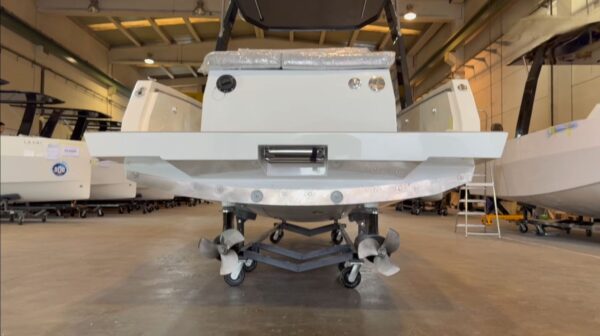
For this new generation of solar electric boats, research will focus on the electric energy storage system in batteries, the control and monitoring system of the boat in the form of Electronic Control Units, the systems Human Machine Interfaces (HMIs), communications and Internet of Things (IoT) systems, and the onboard power electronics system for battery recharging or a hybrid, bidirectional charger-inverter. All of this will allow the vessel to act as an energy asset on the port's electrical grid when not in use.
LASAI director Gari Telleria states that "This collaboration will represent a technological and commercial leap forward. The ships will capture more energy through solar panels while consuming less energy thanks to higher-density batteries and lighter materials. The onboard energy will be greater, making the ships more competitive in the market.".
"At TECNALIA, we are committed to electrification as a key way to decarbonize the maritime sector, developing modular, lightweight, and safe technologies that enable more sustainable and efficient navigation, reducing emissions, and improving the competitiveness of maritime transport.", says Pablo Prieto, head of the Alternative Propulsion Systems Team at TECNALIA.