
The FORTEXVAL project has become a success story in demonstrating the viability of innovative circular bioeconomy approaches applied in rural areas.
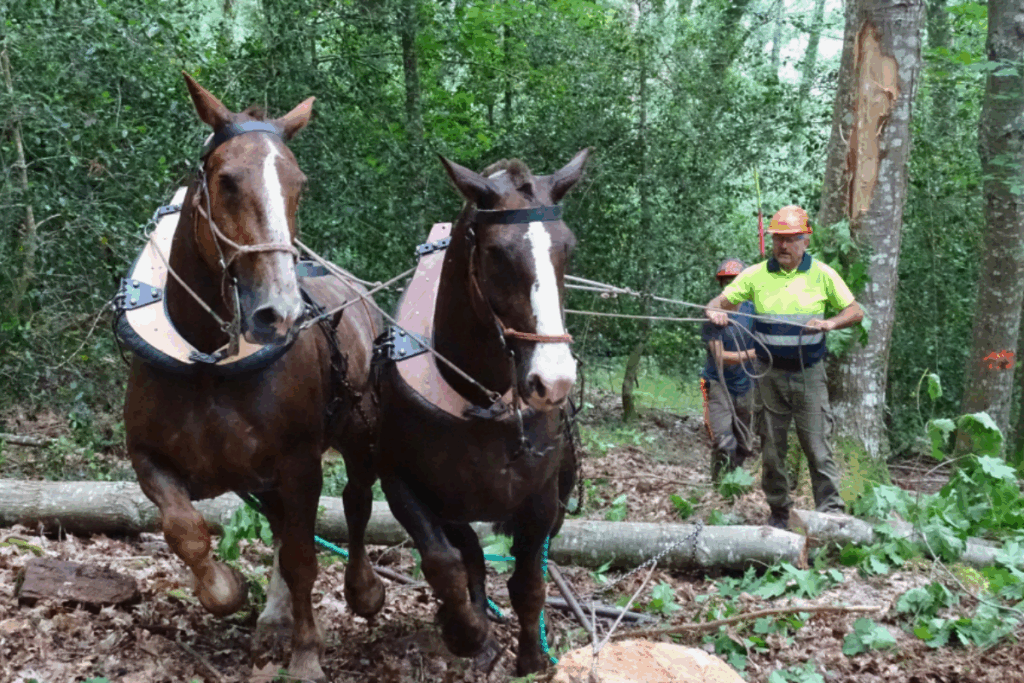
The success achieved in extracting biomass using animal traction and special equipment, the crushing and pelletizing of the collected material on-site, and the valorization of resources, both in biochar and in reinforcing plastic parts, support the relevance of this initiative to develop a sustainable forest management model that helps address challenges such as depopulation and fires.
"After a year of project development, all the activities carried out demonstrate that this is a feasible and viable economic model for areas of natural and scenic interest.", explained Ángel Yedra. "Various social and industrial stakeholders have expressed interest in this proposal, the ultimate goal of which is to be replicated in other areas of Spain as a way to generate development opportunities in rural areas.", concluded the area manager of Advanced Materials and Nanomaterials of CTC.
The representative of the Cantabrian Technology Centre was the first speaker of the day. 'Valuation of forest resources in natural areas'A seminar held at the La Granja de Heras Integrated Vocational Training Centre aimed at evaluating and recognizing the economic, social, and environmental value of forests and presenting various initiatives that propose alternative management models.
FORTEXVAL aims to be a demonstrative example of a bioeconomy model. With a budget of 619.120 euros, Fortexval has the support of the Biodiversity Foundation of the Ministry for Ecological Transition and the Demographic Challenge (MITECO) within the framework of the Recovery, Transformation and Resilience Plan (PRTR), financed by the European Union - NextGenerationEU, Fortexval represents a strategic opportunity to promote new value chains, take advantage of the resources of each territory and boost the economy of natural areas. The Mancomunidad de la Reserva del Saja, the Automotive Technology Centre of Galicia (CTAG) And the CTC Technology Centre make up the consortium for this project that is being developed on the land of the community itself.
When collecting materials, using animal-drawn techniques instead of mechanically propelled machinery eliminates a factor with a high impact on the land and biodiversity. The combination of these techniques with specific machinery designed by CTAG Crushing and pelletizing the material in the forest itself prevents soil degradation and minimizes the loss of biodiversity caused by conventional forestry activities. Furthermore, extracting these low-value elements minimizes the risk of fires.
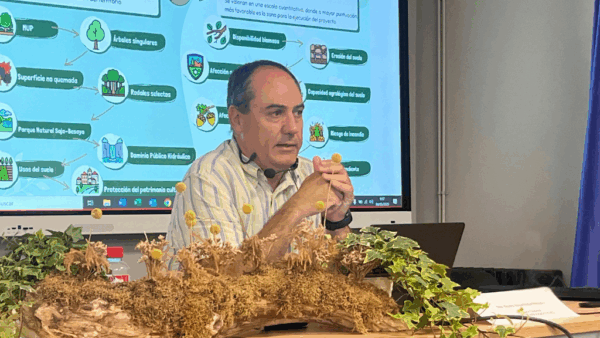
Yedrá explained how CTC uses brushwood and woodchips to produce biochar: a charcoal with multiple properties and highly valued in industrial, agricultural, and energy applications. Biochar, a solid material with high carbon content and high porosity, is produced by heating biomass in a low-oxygen environment through a process called pyrolysis. The resulting product has immense development potential, both for closing the organic waste cycle and for increasing crop yields and revitalizing the soil. Among its atmospheric benefits, biochar reduces methane emissions and unpleasant odors, and facilitates carbon sequestration. If we look at how it affects the substrate, we find that it increases soil fertility and slows the loss of both nutrients and moisture.
The process of valorizing forest biomass was also the focus of the presentation by Ana Magdalena Pérez-Lafuente. The specialist from the Department of Innovation, Products and Materials of the CTAG He indicated that their mission has two parts. First, they undertake the densification of the material using their own machine that can be transported to the mountain. "This facilitates biomass extraction in hard-to-reach areas, as it reduces both the number and size of vehicles required.", he explained. They then apply a methodology called 'compounding' to enrich automotive parts with plant fibers. “The resulting material has less fossil polymer and generates economic returns.”He said.
Finally, Manuel Manrique, director of the Local Development Agency of the Saja Reserve Association, highlighted how the project has changed the region's perception of the value of forest resources. "Now we see possibilities that had not been considered and that allow for new ways of using them.", he stressed. "In fact, the exploitation of these resources has become a source of talent attraction and job creation.".
Rest of the day
Following the institutional opening ceremony, conducted by Ángel Luis Serdio, Director General of Forestry and Biodiversity of the Government of Cantabria, the day included presentations by representatives of the rest of the Fortexval consortium and other relevant speakers.
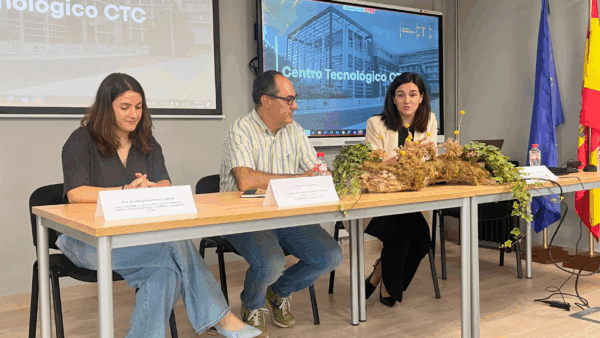
Luis Saúl Esteban Pascual, head of the Biomass Unit at CEDER-CIEMAT, spoke about the use of biomass, while representatives of public and industrial entities such as the Forestry Service of the Government of Cantabria, Adra, Carbón Emergente, and Álvarez Forestal participated in a roundtable discussion on the valorization of forest resources from a public/private perspective.
In this regard, it should be noted that the current model for valorizing forest resources focuses on obtaining raw materials for industry and producing energy, without paying much attention to problems such as erosion, soil and biodiversity degradation, or the potential increased risk of fires due to biomass left behind during extraction.
Given this situation, the afternoon session will showcase other innovative and intervention experiences to preserve the forest heritage of rural areas. The Biodiversity and Santa María La Real Foundations, along with the "Floating Forests" and "Fantastic Forest of Valdavido" projects, will demonstrate how economically attractive and ecologically sustainable solutions can be achieved.