


76% of primary school students feel more creative when playing without screens and 61% indicate that they are able to empathize better and develop deeper social skills when participating in physical or board games.
This is one of the conclusions of the study on games and toys as an educational tool in classrooms, carried out by the Technological Institute of Children's and Leisure Products – AIJU -integrated into the Spanish Federation of Technological Centres (Fedit) through its membership in the Network of Technological Institutes of the Valencian Community (REDIT), in collaboration with the Complutense University of Madrid and the Crecer Jugando Foundation, in which 110 teachers and almost 1900 children between the ages of 5 and 12 participated.
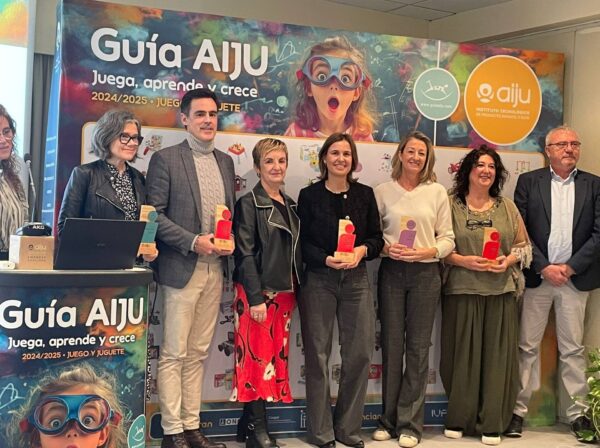
The study, which was presented together with the 34th edition of the AIJU Guide 2024-2025, is based on society's concern about the excessive amount of time children spend in front of screens and technology in general and the need to balance time between digital and non-digital activities, recognizing that traditional games and toys are a fundamental tool for the comprehensive development of minors.
The presentation ceremony for this 2024-2025 edition, which took place in AIJU, brought together all the actors in the national toy sector and was attended by the regional minister for Innovation, Industry, Trade and Tourism, Marián Cano; the regional secretary for Industry, Trade, Consumption and Energy, Felipe Carrasco; the general director of the Spanish Association of Toy Manufacturers (AEFJ), José Antonio Pastor and the director of AIJU, Manuel Aragonés.
The use of digital devices in schools
According to the coordinator of the Children's Research area at AIJU, Pablo Busó, during his speech, 51 percent of the teachers surveyed indicated that the use of digital devices in schools has significantly or greatly reduced the time spent playing and only 21% think that it is not reduced at all or only a little.
“According to observations, when children engage in playful activities, they not only develop academic skills, but also crucial skills such as problem solving, creativity and memory.”, Pablo Busó indicated.
Furthermore, according to this study, 88% of the teachers surveyed expressed their concern about the amount of time that students spend in front of digital devices, warning that this excessive use could negatively affect the development of skills such as reading comprehension and writing.
As explained by the coordinator of the Children's Research area in AIJU, The children who participated in the study recognize that play allows them to develop in multiple aspects, not only in the academic field. “A high percentage of them indicated that they enjoy their free time more when they interact with friends, play outdoors or do crafts, activities that promote cooperation, empathy and imagination.", Pablo Busó highlighted.
On the other hand, when analyzing the activities preferred by the 1900 children interviewed, it can be seen that, in the first positions, there is being with friends (78%), playing outdoors (55%), doing sports (50%) and crafts, painting and drawing (49%) and it is not until the fifth position that the first activity with screens appears, which is playing video games (39%).
“This shows that children want to play and, therefore, as a society we must provide them with the time and space necessary for this play to take place.", Pablo Busó highlighted.
Furthermore, regarding the effects on learning, 86% of teachers stated that the use of toys benefits children's learning quite a bit or a lot, while this same percentage drops to 40% when it comes to the use of digital devices.
Finally, in conclusion, the study carried out by AIJU It shows that both teachers and children agree on the importance of games and toys as fundamental educational tools. The balance between the use of digital devices and traditional games is crucial to ensure comprehensive development, which promotes both emotional well-being and academic learning.
AIJU Guide 2024-2025
The AIJU Guide 2024-2025 is a project funded by IVACE, through the GVA 2024 line, to enhance the capacity and activity of the AIJU Technology Centre - integrated into Fedit due to its adherence to REDIT-, as well as to develop excellence in R&D&I, disseminate the results of the research carried out and facilitate and promote the transfer of knowledge to companies in the Valencian Community.
It is worth noting that, at present, it continues to be the only guide in the national context endorsed by consumer institutions in which only products that have passed pedagogical and usability studies with more than 100 hours of free play are recommended. In this edition, 37 groups of companies and manufacturers have participated, contributing a total of 133 products for study, of which 129 have been selected to appear in this Guide.
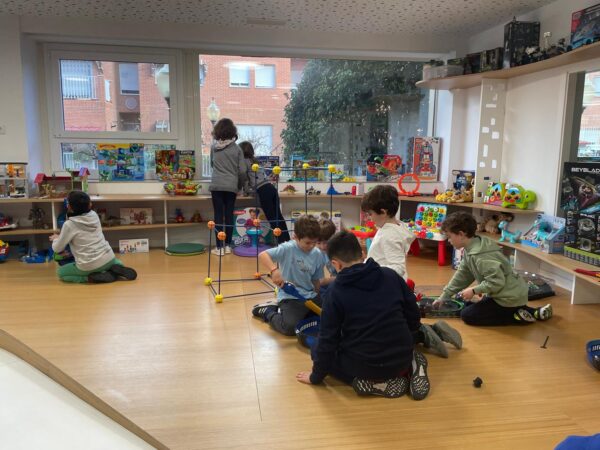
To make it easier to find and consult, the toys recommended in this guide have been classified by theme, taking into account the different insights and psychopedagogical aspects they develop and within each block by age. In addition, as in the last edition, the AIJU 2024-25 Guide includes a category introduction with a sheet that provides information on where, how, with whom or what children play.
According to the director of AIJU, Manuel Aragones, “We cannot say that the products included in this Guide are the best on the market, but we can say that all those recommended in it are products that have successfully passed the relevant studies. The selection of products that appear in this Guide is part of a long process of observation, analysis and evaluation that is coordinated by AIJU".
For his part, the general director of AEFJ, José Antonio Pastor, has highlighted that this new edition of the Guide “It is one of the main references for consumers looking for professional, independent and reliable information.".